
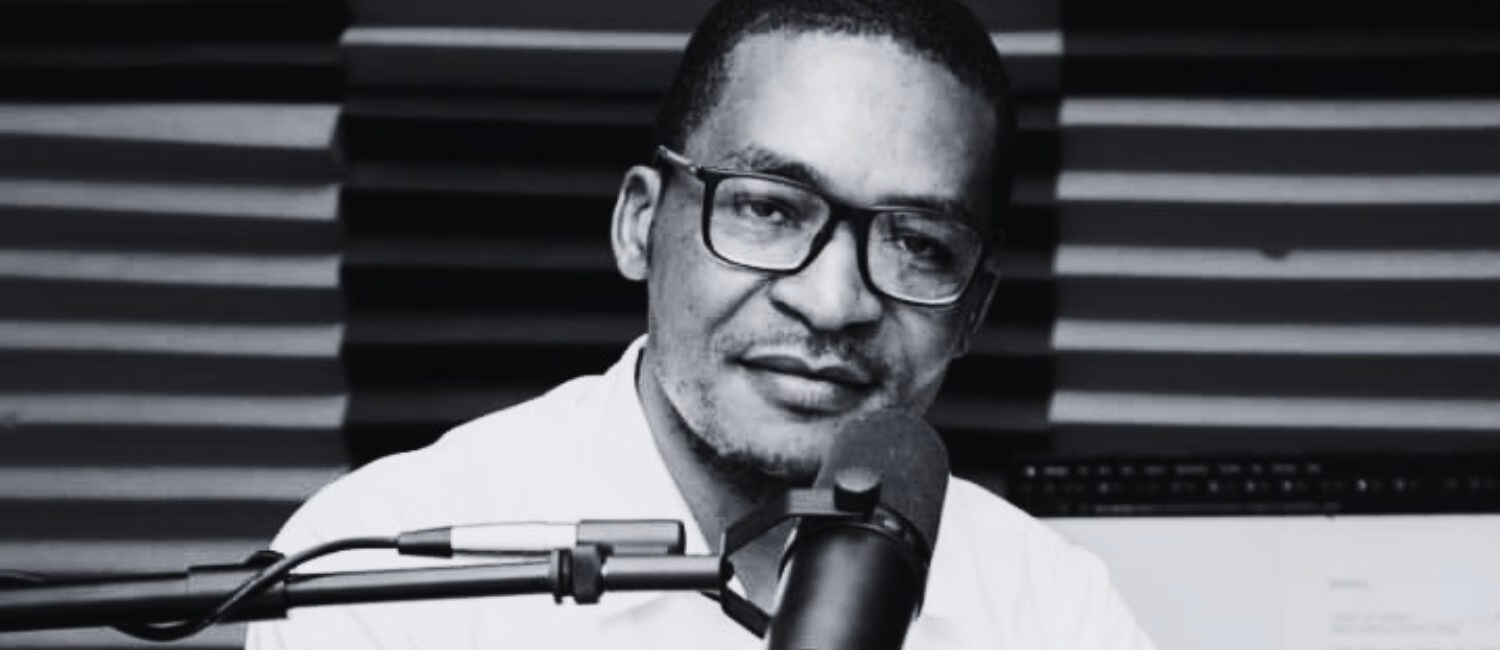
In this country we have become experts at speaking. The microphone has reached every corner. The launch event has its own calendar. The report has its own season. We have not yet mastered is the small, stubborn art of being believed.
Consider the puzzle.
Our institutions are never silent. Every day there is a statement. Each week there is a ceremony. And perhaps a month there is a report thick enough to stop a door. Every year there is a long list of achievements, read aloud with great confidence. Yet the more we speak, the more it seems the citizen leans closer, not to hear us better, but to ask a quieter question: is this true, and was I ever part of it?
I have spent enough years in this trade to know where the mistake begins. We treat Public Relations as the business of the mouth. We hire the loudest voice, buy the brightest banner, book the morning slot on the radio, and call it communication. But Public Relations in the public sector is not the business of the mouth at all. It is the business of trust. And trust is a shy animal. It does not come when you shout for it. It comes when it sees that you are listening.
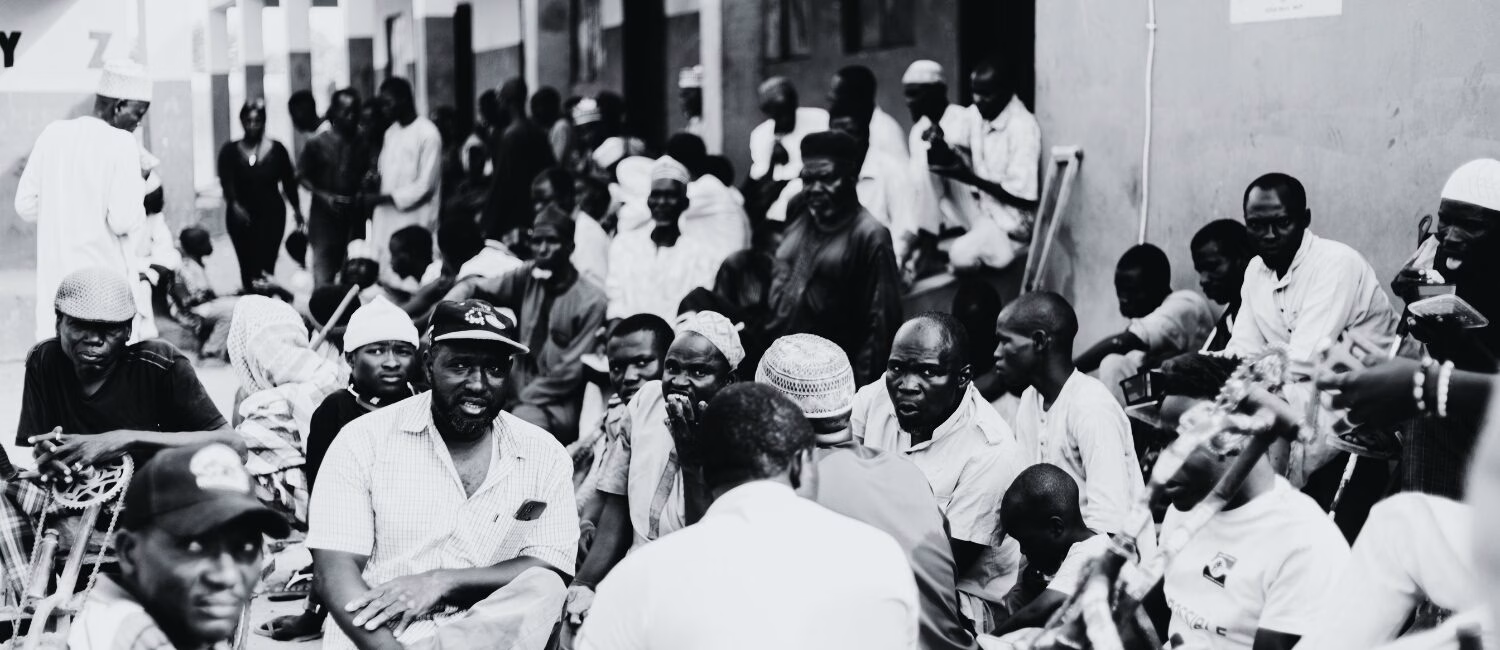
You can sink a borehole in a village that has walked five kilometers for water since independence. Still you can raise a hospital where mothers once gave birth on the back of a motorcycle. You can build a school with a roof that does not leak. But if the citizen does not understand what was done, or worse, if he was never made to feel part of it, that achievement will lie buried in a report nobody reads. A good deed without communication is like a generous meal served in a locked room.
Then there is the matter of the office.
A citizen walks in with one problem and leaves carrying three. He goes home and tells the story at the dinner table. The next morning his neighbor offers a matching tale. By the end of the week an entire institution is wearing a reputation that is, in truth, worse than its actual conduct. This is the cruelty of perception. It is not built in a day, and it cannot be repaired with a single press conference and a tray of soda. The private sector sells products, and when a product fails you replace it. Government sells trust, and when trust fails, the road back is long, dusty, and uphill.
We deceive ourselves about the times we live in.
The complaint no longer dies in the marketplace or on the crowded daladala. Today everyone carries a small television in his pocket. A citizen receives poor service at eight in the morning, and by ten minutes past eight the clip is already travelling faster than any official statement we could ever draft. By the time the institution responds the following afternoon, the verdict has already been delivered, debated, and forwarded to three more groups. We keep writing for a slow world that no longer exists.
And here is the part that has fascinated me for more than a decade. Whenever we sit down to discuss development, our tongues reach naturally for the heavy things. Roads. Railways. Airports. Towers that scratch the sky. Rarely, almost never, does anyone raise a hand to speak about communication. We will spend billions building a bridge of concrete across a river, and not a single shilling building the bridge between the institution and the human being on the other bank. Yet it is the second bridge that carries the heavier traffic.
Because in the end the citizen is not difficult. He is not asking for the impossible. Just to be respected. And wants to be heard. He wants to understand why a thing was done, not merely be informed that it was done. Tell him the reason and he will forgive the inconvenience. Hide the reason and he will resent even the gift.
The world keeps turning, and our trade turns with it. New technologies arrive each season. Artificial intelligence now sits at the table, eager to write our statements for us. The tools will keep changing. But one thing refuses to change: the citizen will keep searching for the truth, and the institution will keep searching for the citizen. Two parties, looking for each other in a crowded room, often facing the wrong direction.
So the real question is not which new machine we will buy. The question is what we will do with it. Will we use it to listen more, or simply to speak louder? Because the citizen, most days, is not waiting for one more statement. He has had his fill of statements. He is waiting for someone, anyone, on the other side of that counter, willing to lean in and listen.
And perhaps that, and not the microphone, is where Public Relations truly begins.